
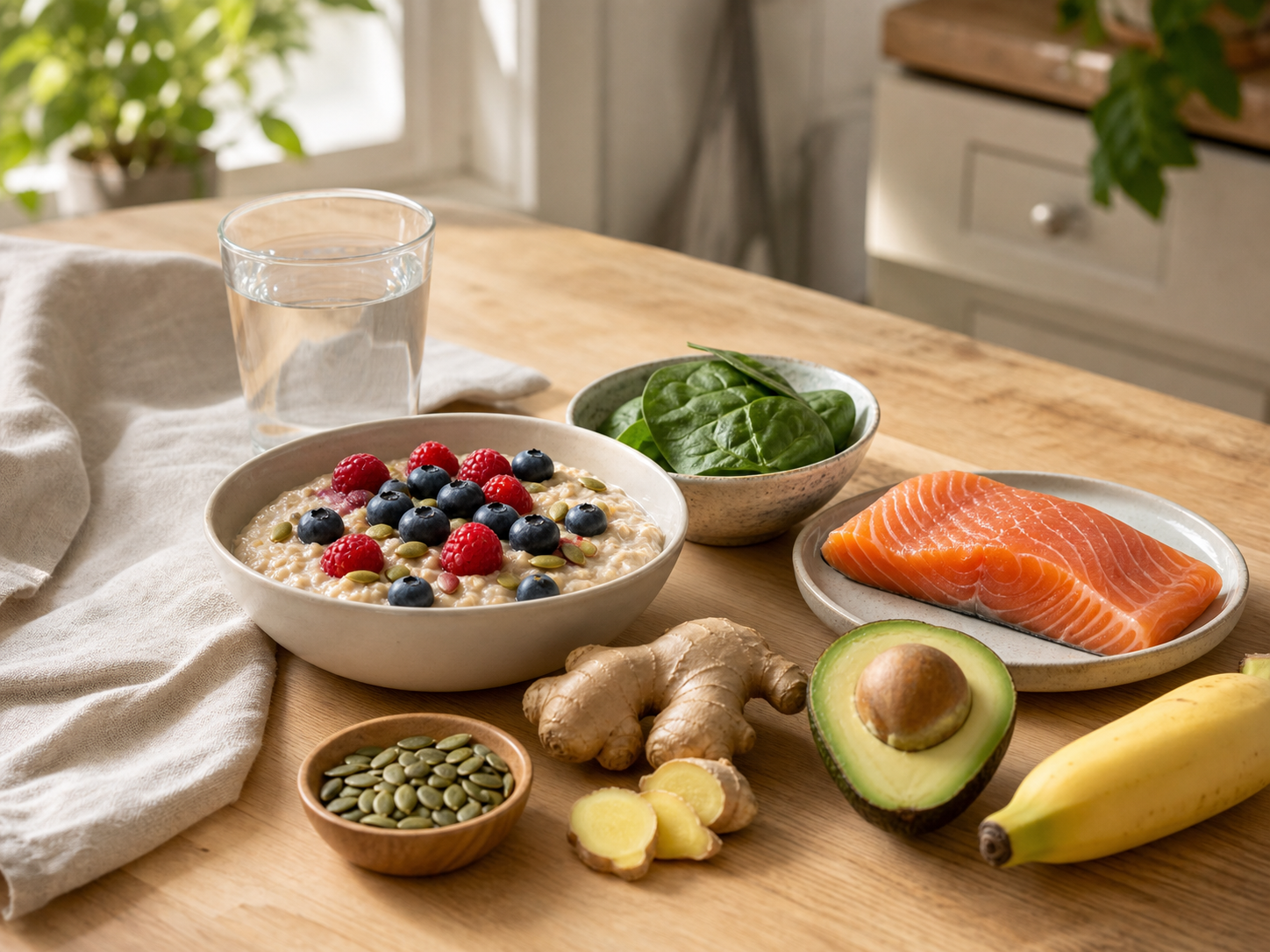
There is no universal food that stops headaches. But for some people, steady meals, enough fluids and noticing personal patterns can be useful parts of a broader headache plan. This guide is about supportive everyday habits—not a replacement for diagnosis or treatment.
Start with regular meals and fluids
Long gaps between meals, dehydration, caffeine changes and missed sleep can all be relevant for some people with migraine or recurrent headaches. The American Migraine Foundation recommends looking at regular meal times and individual patterns rather than assuming a long list of foods is to blame.
- Keep a drink nearby and sip regularly through the day.
- Build a simple breakfast or first meal you can repeat on busy days.
- Pack a practical snack if you know you will be away from food for a long time.
- Make caffeine changes gradually if you are trying to reduce it.
Build reliable, balanced meals
The aim is not a “headache diet.” It is a dependable meal with carbohydrate, protein, colour and enough flavour to make it enjoyable. These foods are useful building blocks, not treatments:
- Oats, wholegrain toast or rice: an easy carbohydrate base.
- Eggs, yoghurt, beans, fish, tofu or chicken: practical protein options.
- Leafy greens, berries, bananas and other produce: colour, fibre and variety.
- Nuts, seeds, avocado or olive oil: satisfying fats to round out a meal.
Track your own patterns—without becoming restrictive
Specific “trigger foods” are often discussed, but the evidence is not strong enough to blame the same foods for everyone. In some cases, a craving can be an early sign of a migraine attack rather than its cause. A short diary can be more helpful than cutting out many foods at once.
For two to four weeks, note when a headache starts, what you ate and drank, sleep, stress, exercise, alcohol, caffeine, medication and any other symptoms. Take the pattern to a GP, neurologist or accredited practising dietitian if headaches are frequent or disruptive.
Three low-effort meal ideas
Oats with berries and yoghurt
Cook oats with milk or a milk alternative, then add yoghurt, berries and pumpkin seeds. Make overnight oats if mornings are rushed.
Salmon, greens and rice bowl
Pair cooked salmon or tinned salmon with rice, spinach, cucumber and lemon. It is quick, filling and easy to adapt.
Eggs on toast with avocado
Add a piece of fruit or tomatoes on the side. This is a simple fallback meal when you need something more substantial than coffee alone.
The takeaway
A consistent routine often matters more than chasing a single “best” food. Eat regularly when you can, stay hydrated, notice what is true for you and get clinical advice for new, severe or recurring headaches.