
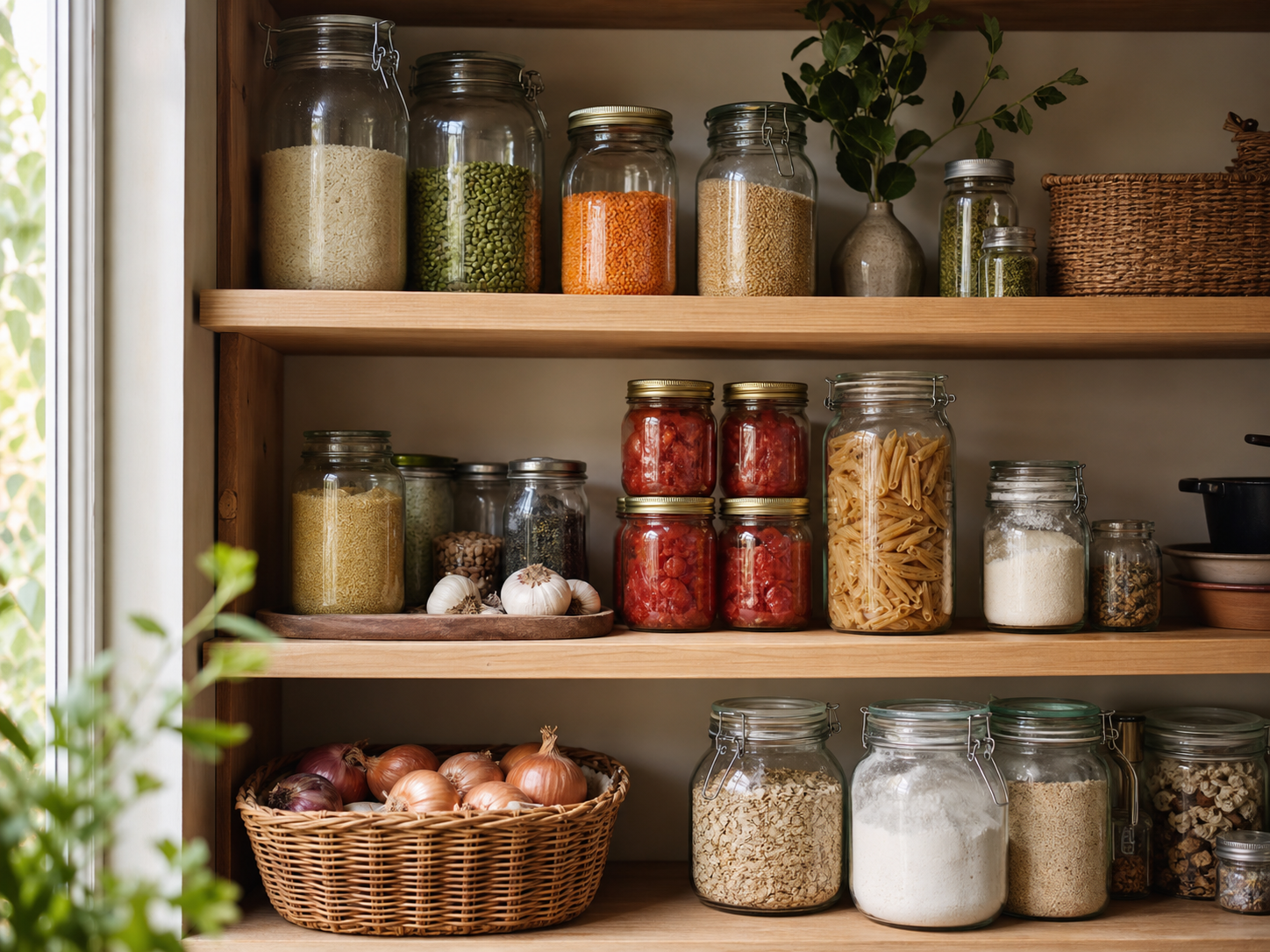
A useful long-term pantry is not about buying everything at once. It is a small, organised collection of foods you already know how to cook, stored in a cool, dry place and used in rotation.
Start with foods you will genuinely use
Choose staples that work across several meals. The best storage food is food that does not sit forgotten at the back of a cupboard.
- Grains: rice, oats, pasta, couscous and flour.
- Legumes: dried lentils, dried beans and canned beans.
- Protein basics: canned fish, nut butter, shelf-stable milk and tofu.
- Cooking essentials: oil, salt, vinegar, herbs, spices and stock.
- Fruit and vegetables: canned tomatoes, canned corn, frozen vegetables and dried fruit.
Store food well
Keep dry goods away from heat, direct sun and moisture. Airtight containers are helpful for opened packets, especially where pantry pests are a concern. Leave labels and dates visible so you can rotate stock easily.
Think in storage groups, not one “forever” list
Different foods have different storage needs. Dry staples and unopened commercially canned foods belong in a cool, dry cupboard; frozen food needs a dependable freezer; and opened cans should be moved to a covered food-safe container and chilled. Use the package directions and check the FoodSafety.gov cold-storage chart when you are unsure.
A small starter list
If you are building from scratch, begin with enough ingredients for a few flexible meals:
- Rice, pasta or another favourite grain
- Canned tomatoes and stock
- Beans, lentils or chickpeas
- One or two canned protein options
- Frozen vegetables
- Oil, salt, pepper and the spices you use most
Turn pantry staples into meals
Lentils, tomatoes and stock become soup. Pasta, canned fish and peas become a quick dinner. Rice, beans and frozen vegetables make a filling bowl. Build around a few familiar combinations and your pantry becomes useful every week, not just in an emergency.
A five-minute monthly check
- Use anything approaching its best-before date in next week’s meal plan.
- Check packs for moisture, pests, leaks, swelling or damage.
- Replace only the things you used, rather than buying a second pantry.
- Keep a short note of your reliable “pantry meals” on the cupboard door.