
Passover food traditions are beautifully varied. This guide is a practical starting point for meal planning, not a universal checklist: what is appropriate can differ by family, community and level of observance.
Fresh ingredients to plan around
A simple table can begin with the foods you enjoy cooking and sharing. Fresh produce, herbs and make-ahead dishes are especially useful when you are feeding a group.
- Leafy herbs, salad vegetables and citrus
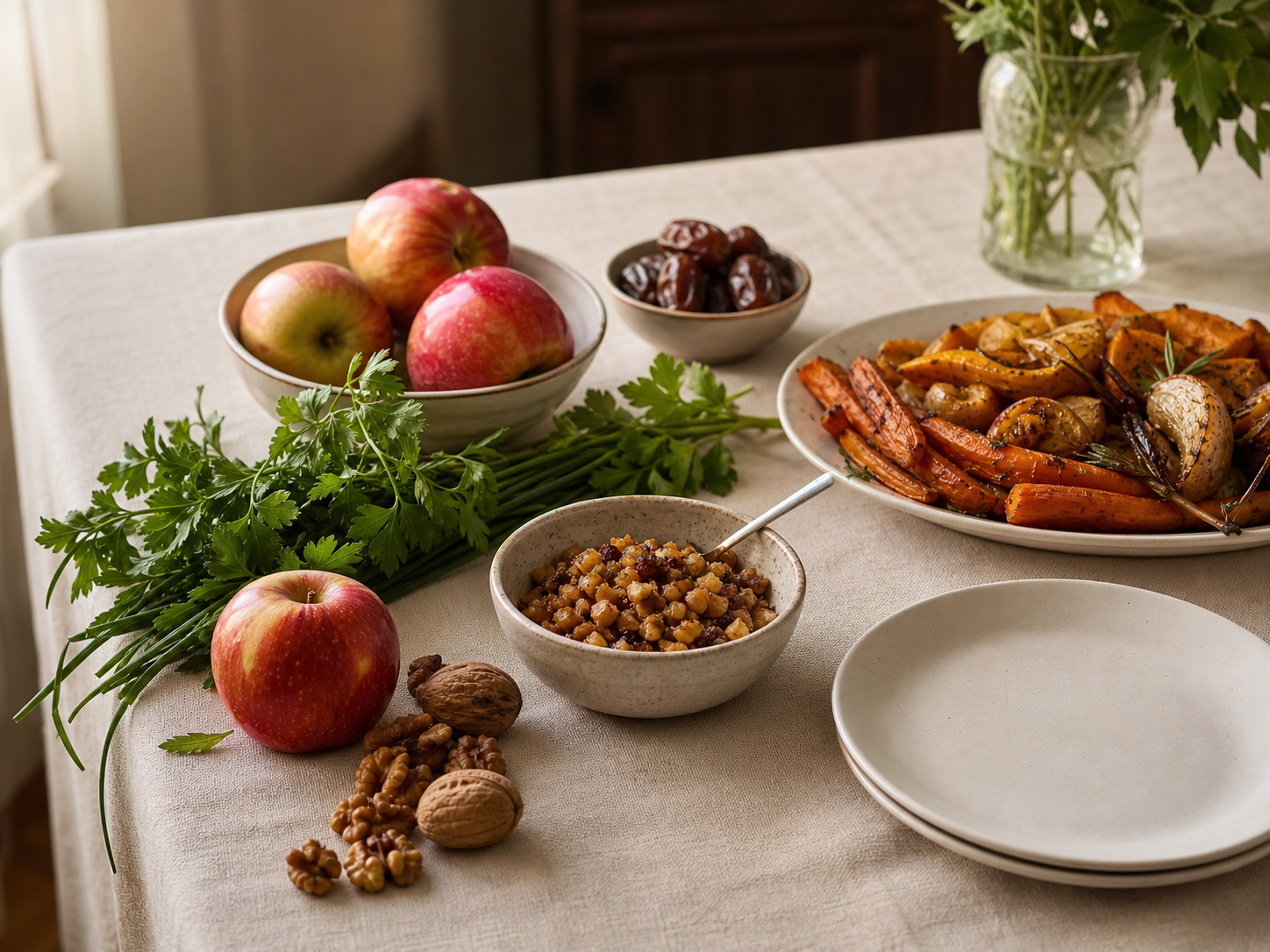
- Apples, dates, walnuts and other fruit and nuts for charoset-style dishes
- Potatoes, sweet potatoes, carrots and other roastable vegetables
- Eggs, fish, chicken or a plant-based main that suits your table
- Broths, herbs, spices and sauces that meet your household requirements
Know what needs checking
Ingredients and products that suit one household may not suit another. Packaged foods, spices, sauces, drinks and prepared items can all have specific Passover or kosher requirements. Check labels and follow the guidance that applies to your family and community.
Make the meal easier
Choose one or two dishes that can be prepared early, then keep the rest simple. Roasted vegetables, a fresh herb salad, a comforting soup and a main dish you know well can make the meal feel generous without creating a stressful cooking day.
A flexible menu idea
- A clear vegetable or chicken soup
- Roast chicken, fish or a vegetable main
- Herb-roasted potatoes and carrots
- A crisp salad with lemon and fresh herbs
- Fruit, dates and a nut-based dessert or sweet dish that suits your tradition
Plan around the people at your table
Ask about allergies, vegetarian needs and children’s preferences early. A simple vegetable dish, a clearly labelled gluten-free option where appropriate, and one familiar dish can make a shared meal easier for everyone.
Keep the focus on sharing
A food list is only a starting point. The best plan is one that respects the people at your table, leaves space for family traditions, and gives you time to be present with guests.